Overview
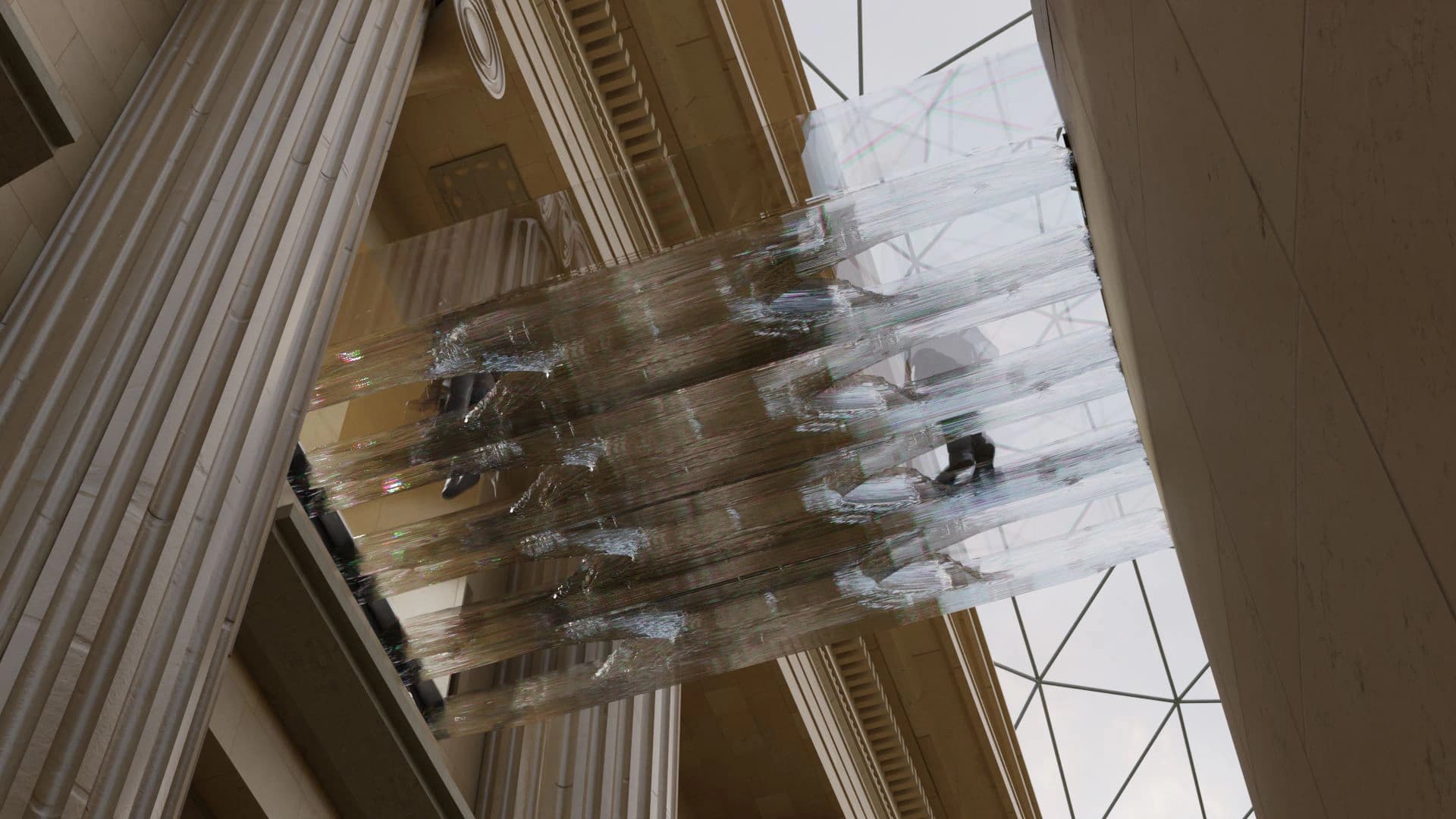
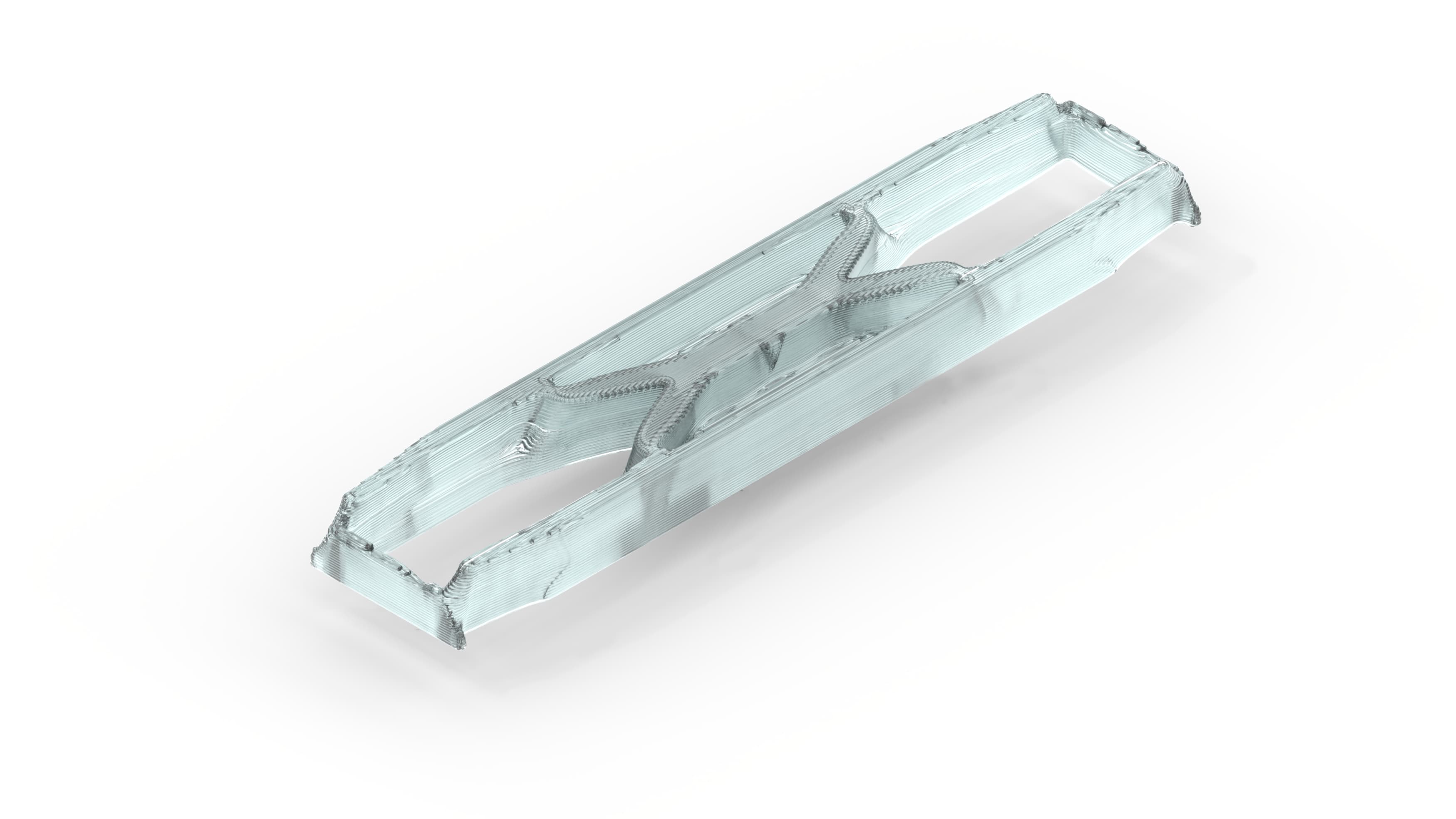
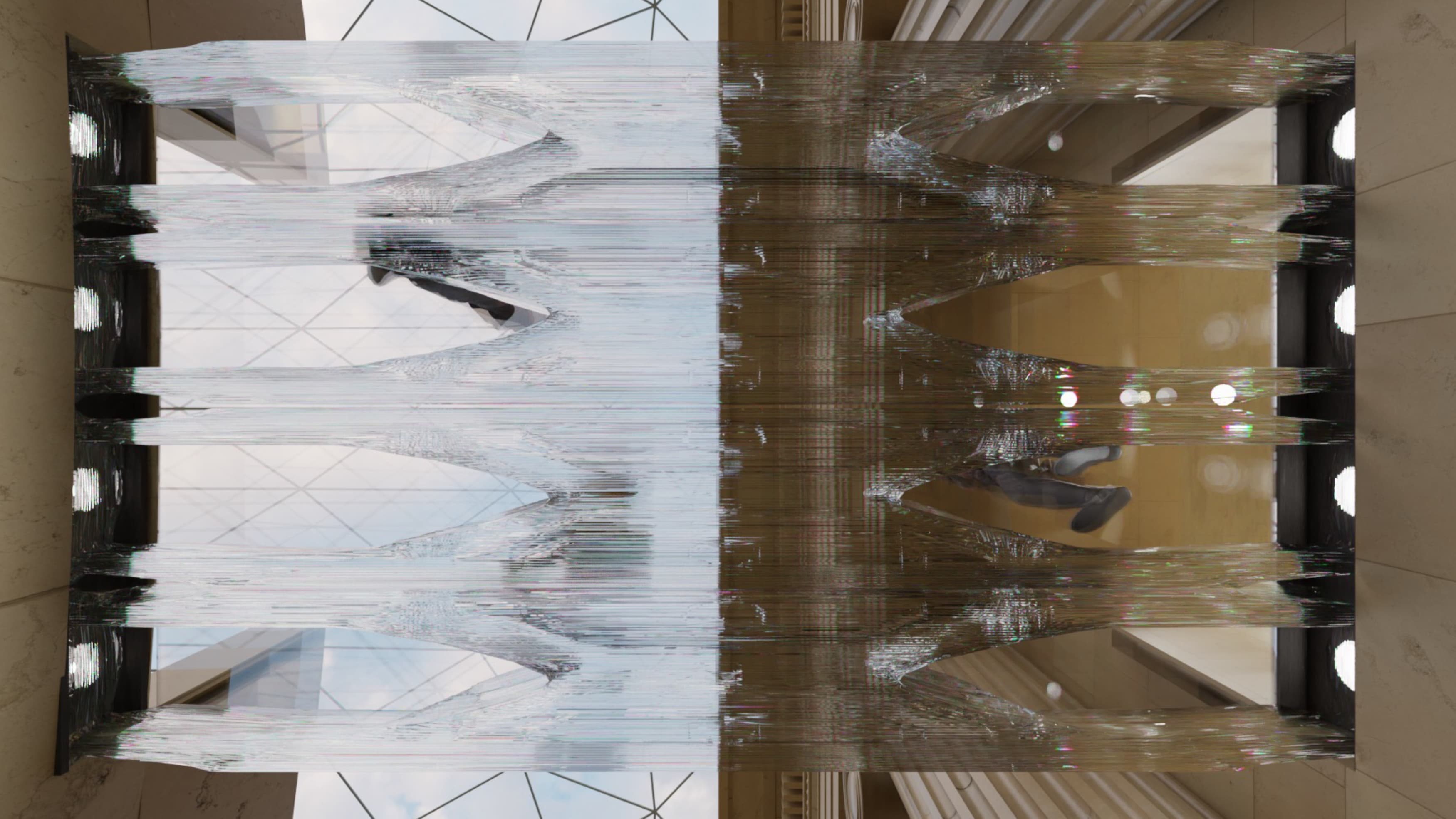
TO3DPGS (Topology Optimization for 3D-Printed Glass Structures) investigates how additive manufacturing constraints can be integrated directly into topology optimization to enable large-scale, monolithic glass structures. This project was awarded a 9.5 out of 10.
The project develops a customized 3D topology optimization algorithm tailored to glass behavior and the manufacturing limitations of FDM-based glass printing (G3DP2 system). By embedding overhang constraints, path continuity requirements, and nozzle geometry limits into the optimization process, the research connects structural performance with fabrication feasibility.
Key Features
-
Custom 3D Topology Optimization Algorithm: Developed a 3D SIMP-based topology optimization framework using hexahedral finite elements, optimized for compliance minimization while respecting material-specific constraints of brittle glass.
-
Integration of Additive Manufacturing Constraints: Implemented a modified layer-by-layer overhang filter adapted to 3D, enabling printability without support structures. Overhang angles were parametrically adjusted through element scaling to meet fabrication limits (>60° from base plate).
-
Path Continuity and Island Reconnection: Integrated a modified Dijkstra-based shortest-path algorithm to reconnect isolated “islands” per layer, ensuring uninterrupted glass extrusion and preventing print failures caused by stop-start behavior.
-
Nozzle Offset & Medial Axis Toolpath Generation: Developed a post-processing workflow (MATLAB + Python) to generate printable toolpaths using medial axis extraction and adaptive nozzle offsetting, eliminating underfilling, overfilling, and zig-zag patterns.
-
Material-Specific Structural Modeling: Incorporated glass-specific structural behavior, accounting for its high compressive strength and low tensile capacity. Evaluated results using Drucker–Prager stress criteria and ANSYS validation.
-
Scalable Computational Framework: Deployed the algorithm on the DelftBlue supercomputer, enabling evaluation of domains exceeding 1,000,000 elements — a significant increase compared to previous research.
Technologies Used
- MATLAB: Core topology optimization framework (SIMP, MMA solver, FEM implementation, overhang filtering).
- Python: Nozzle offsetting and path preparation.
- ANSYS: Structural validation and stress evaluation.
- Grasshopper & Rhino: Visualization and geometry refinement.
- Blender (Cycles): High-fidelity glass rendering.
- RoboDK / Slic3r / Cura: G-code preparation and robotic toolpath simulation.
- DelftBlue HPC: Large-scale computational processing.
Scale models
The core contribution of TO3DPGS is the topology optimization algorithm itself: embedding overhang, path continuity, and nozzle constraints directly into the optimization process to produce structurally sound, fabrication-ready glass geometries. The scale models below are a follow-up to that work, not its conclusion a way to validate and communicate the optimized geometry physically while it remained uncertain whether the G3DP2 printer would be available on schedule. Three scaled versions were produced using alternative fabrication methods: waterjet-cut, cast, and 3D-printed (PLA).
Waterjet-cut
Cast
PLA 3D printed
Challenges and Learnings
One of the main challenges was designing for the brittle behavior of glass. Although glass is generally isotropic as a material, it performs far better in compression than in tension, which required careful consideration of stress distribution and failure criteria within the optimization framework.
Another challenge involved integrating additive manufacturing constraints directly into the topology optimization process. Overhang control, path continuity, and nozzle geometry restrictions fundamentally influenced the final geometry and required restructuring conventional topology optimization logic.
Computational limitations also played a major role. Large 3D domains required significant RAM and parallel processing, making high-performance computing essential for evaluating detailed structural configurations.
Outcome
The project successfully demonstrates that a monolithic, topology-optimized glass structure can be designed specifically for 3D printing.
Additive manufacturing constraints were embedded directly into the optimization process rather than solved in post-processing, resulting in geometries that are both structurally optimized and fabrication-ready.
TO3DPGS contributes to structural glass research by extending topology optimization into large-scale 3D-printed glass architecture, creating an integrated workflow that moves from structural logic to print-ready geometry.
This work continued in the Steppingstone project, which you can view here.