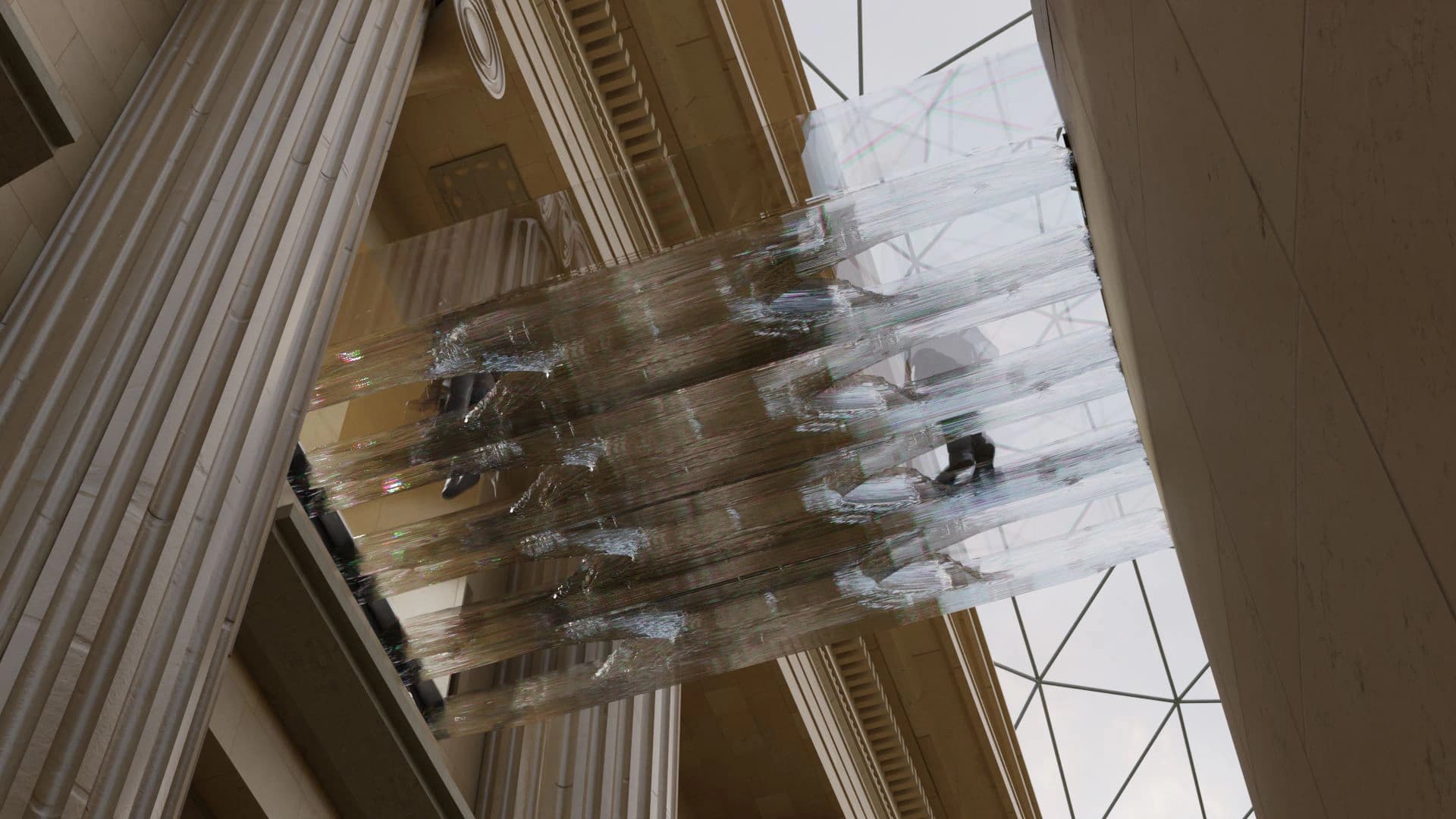
Overview
The 3D-Printed Glass Steppingstone was developed as an architectural-scale fabrication case for Glasstec 2024 in Düsseldorf. The project was made possible through the financial support of Glasstec, enabling the transition from computational research into a physically printed molten-glass prototype.
The design builds upon the topology optimization framework previously developed for the monolithic pedestrian bridge. For this project, the algorithm was adapted to be compatible with the G3DP3 glass printing system, translating structural logic into a fabrication-ready geometry.
Design & Structural Setup
The steppingstone was structurally configured with:
- Clamped top corners to preserve the rectangular top surface
- Uniformly distributed load applied to the top surface
- Central circular support at the bottom
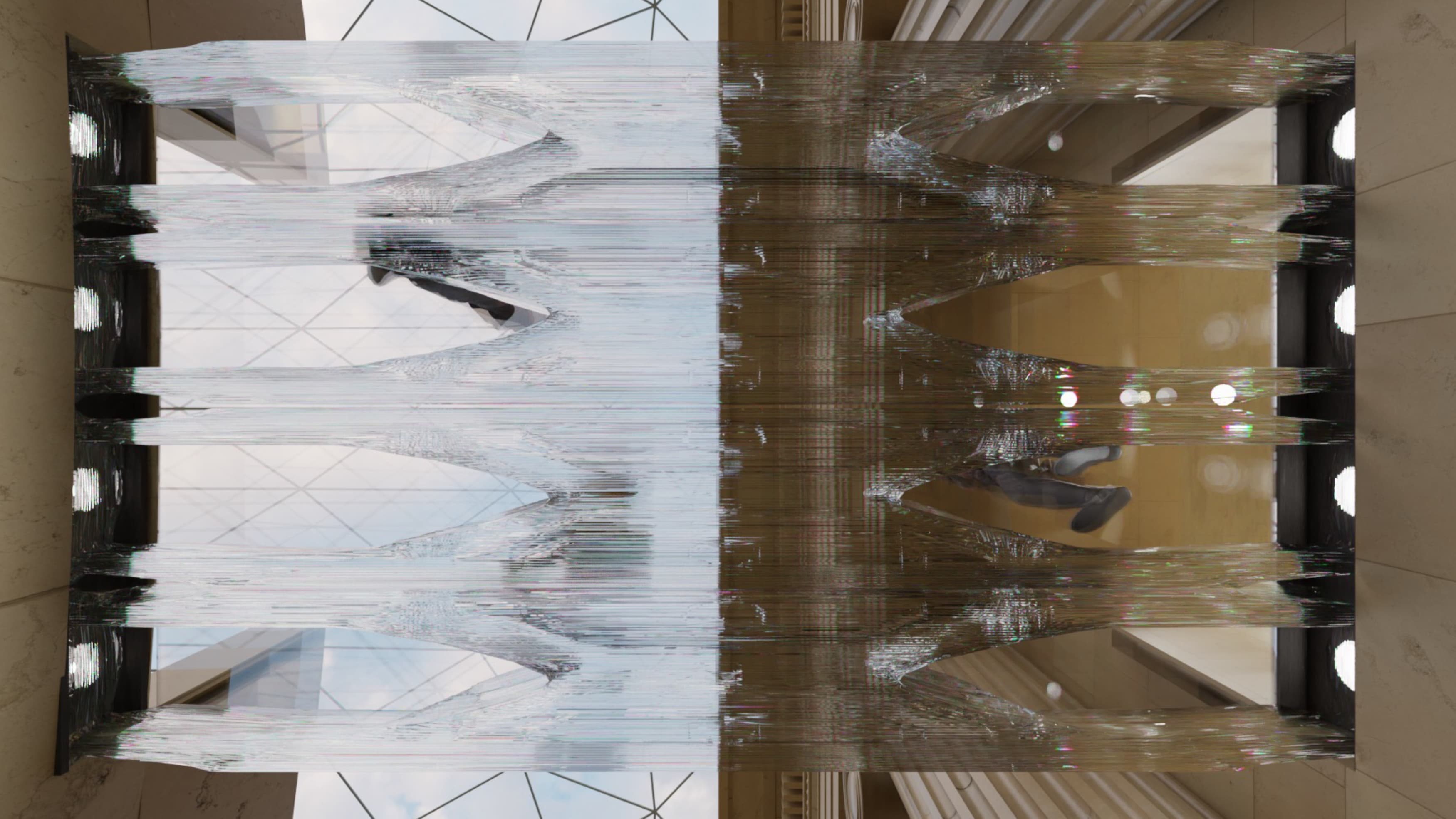
This setup ensured a compression-dominant load path consistent with glass’ material behavior. The top surface incorporates a double float-glass layer, similar to the pedestrian bridge strategy, providing impact resistance and surface durability.
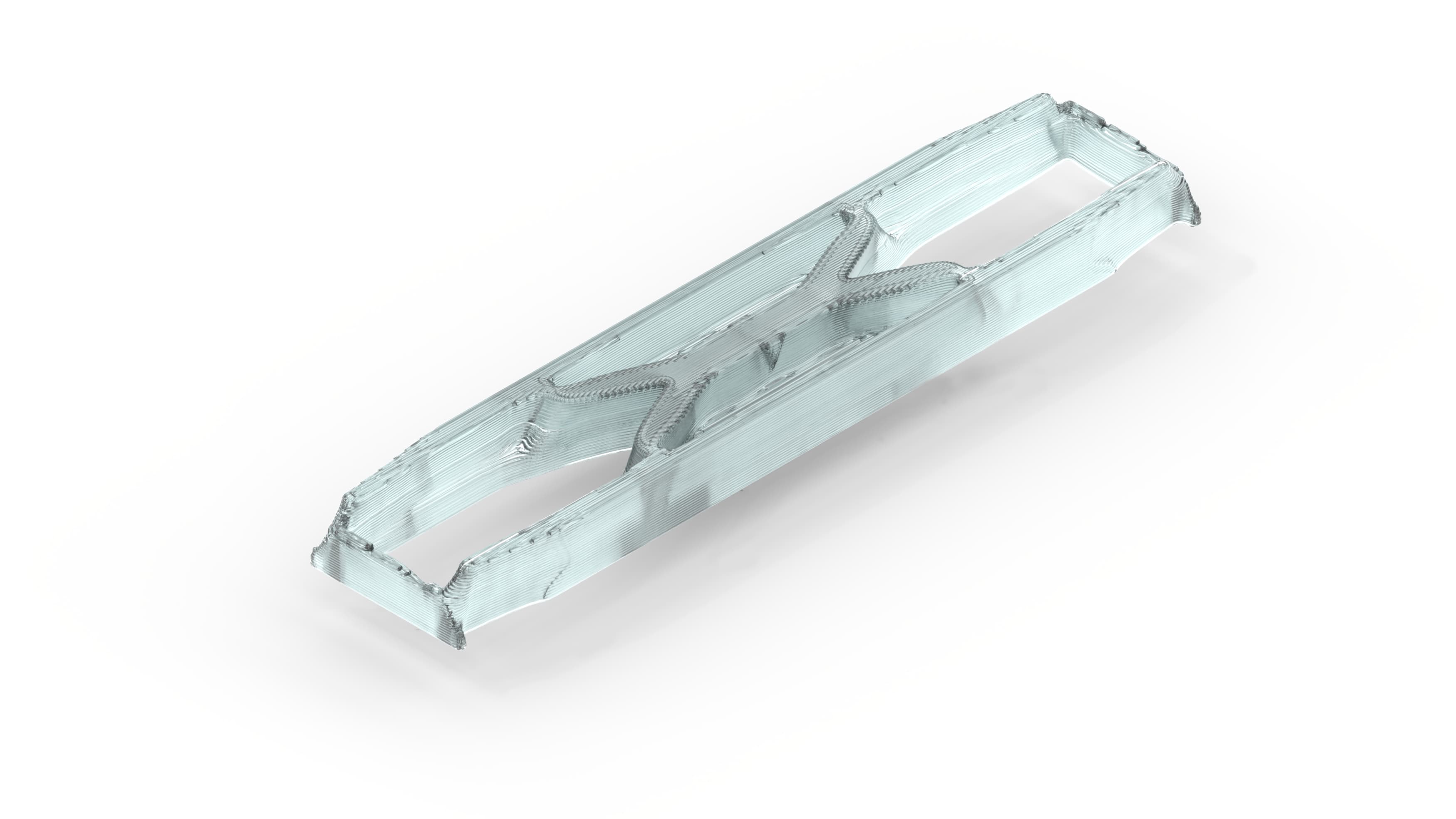
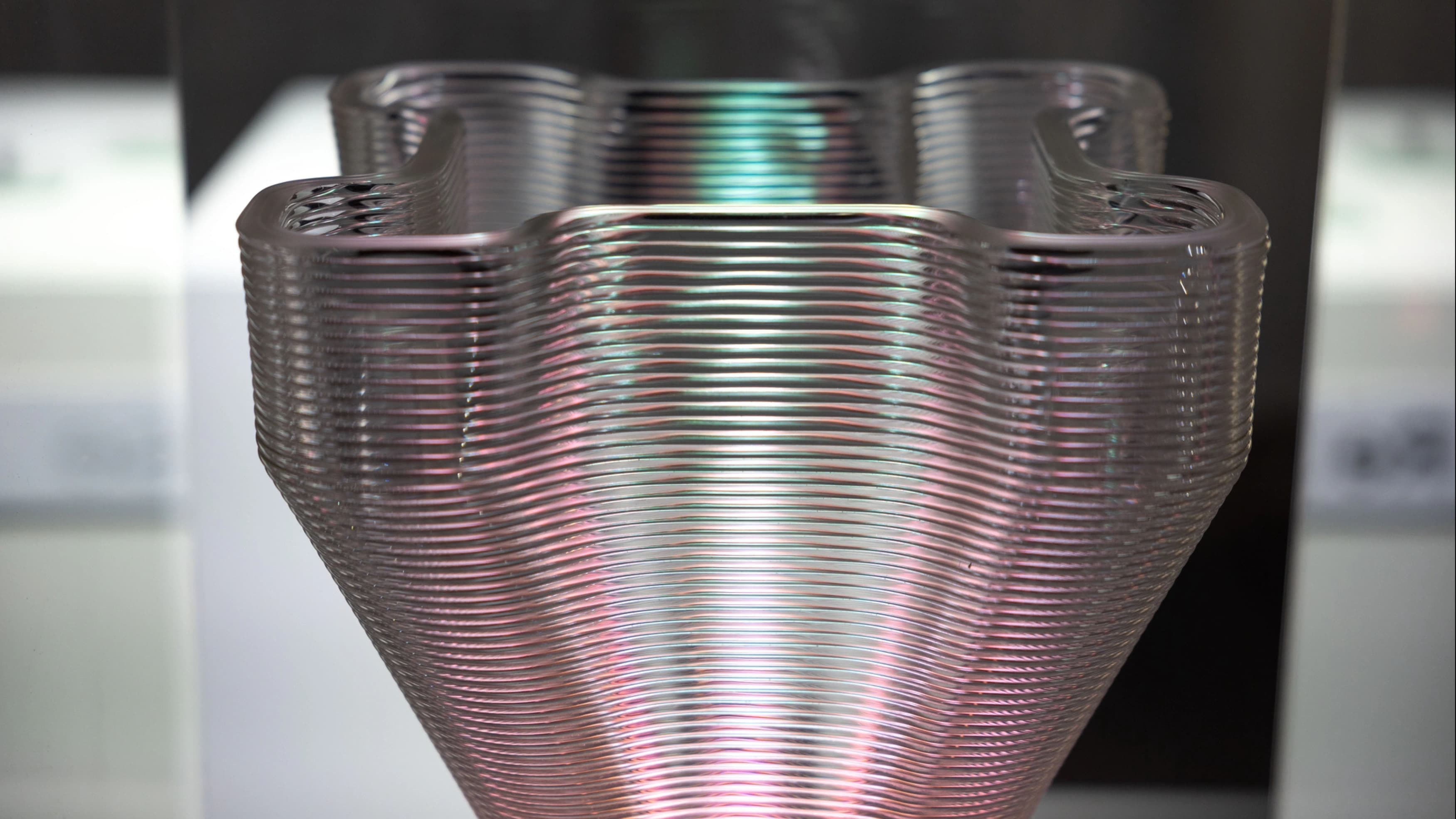
The topology-optimized result generated four tapering columns that converge toward a circular base and supporting top plate. Three sides are interconnected, while one side remains open, expressing the structural flow through the object.
Fabrication-Driven Adaptations
The fabricated prototype represents a fabrication validation, not a direct one-to-one reproduction of the raw topology-optimized geometry.
To ensure print stability and minimize risk during molten-glass extrusion, several controlled adaptations were introduced:
- Curvature smoothing to reduce thermal stress accumulation
- Removal of bidirectional toolpaths
- Transition to a continuous single-wall toolpath strategy
- Replacement of the original printed top plate with two float-glass planes
These changes maintained the core structural logic while adapting the design to current molten-glass printing constraints, particularly thermal accumulation and minimum feasible toolpath lengths.
Collaboration with Evenline
The prototype was realized in collaboration with Evenline, the company advancing development of the G3DP3 system. The steppingstone was defined as a fabrication validation case and executed without additional machine-specific experimentation or post-submission optimization.
This ensured that the printed result reflects realistic production conditions rather than a laboratory-optimized scenario.
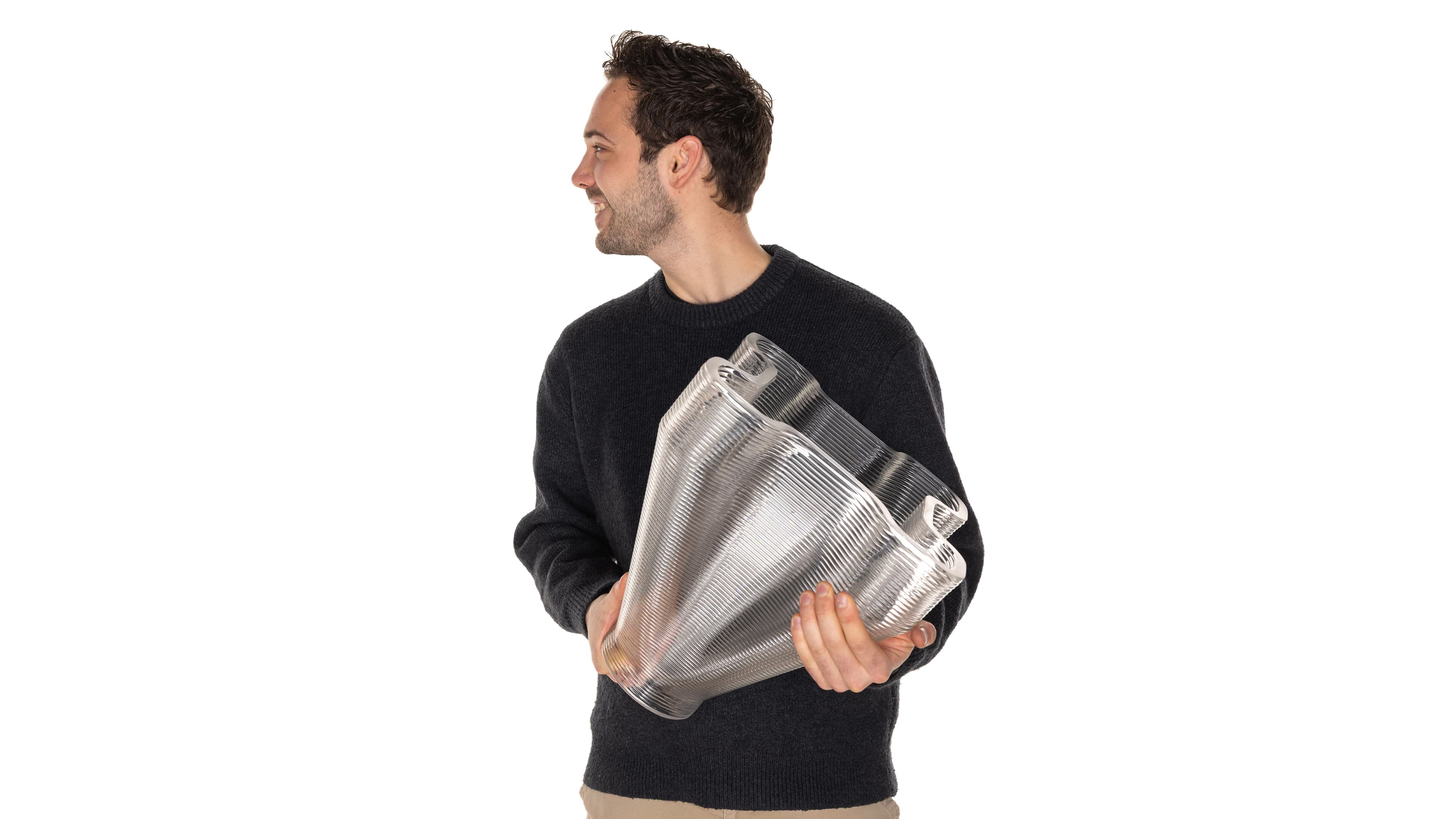
The steppingstone was printed with its large open face oriented downward to enhance stability. Printing parameters were adjusted to reduce the minimum viable path length, enabling successful fabrication of the small circular aperture near the top.
Fabrication Outcome
- Fabrication time: 1 hour 57 minutes
- Mass: 9.6 kg
- Dimensions: 318 × 318 × 358 mm (L × W × H)
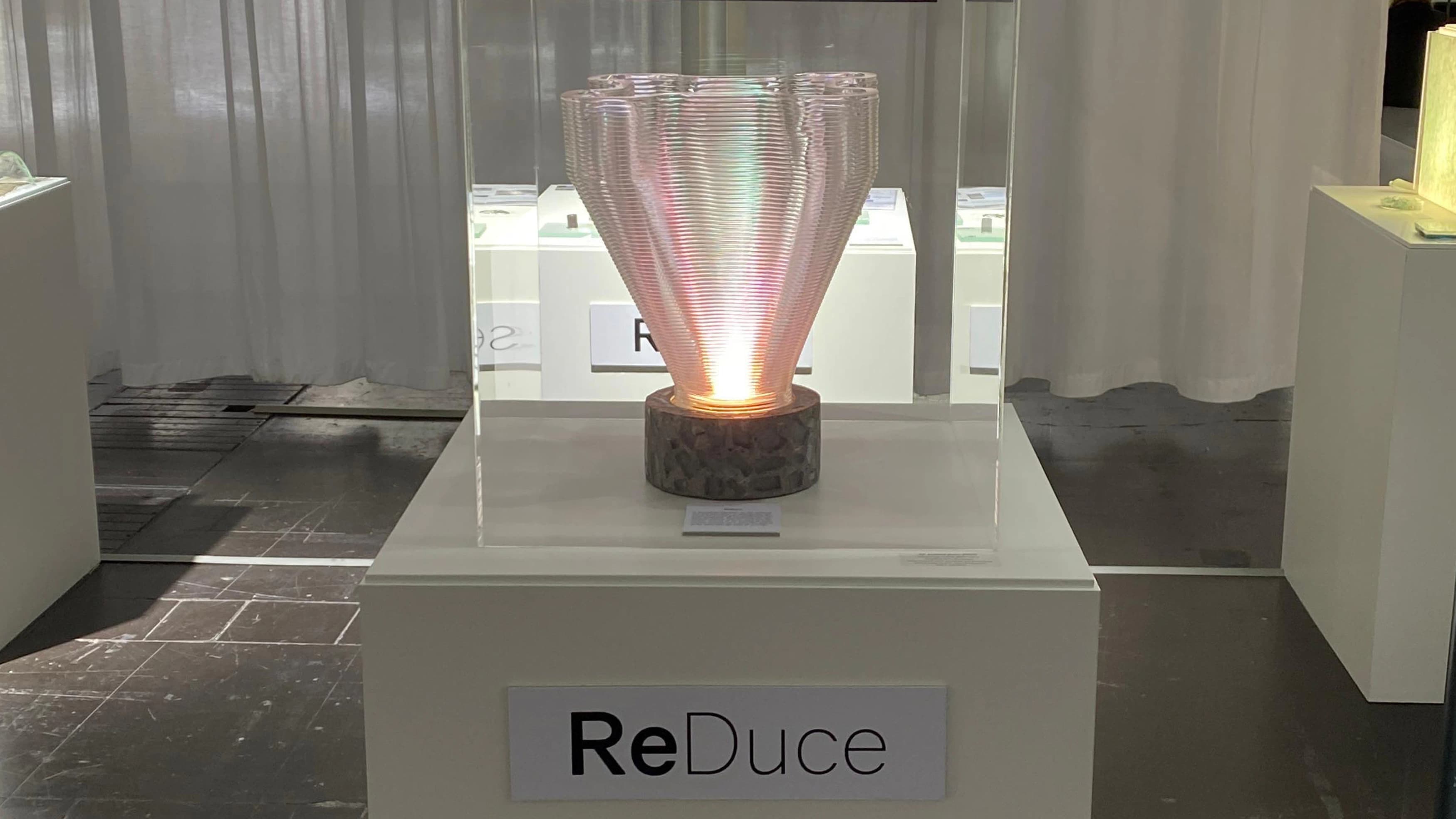
The final object demonstrates that topology optimization, when carefully adapted to fabrication constraints, can be translated into an architectural-scale molten glass structure.
Significance
Presented in the context of Glasstec 2024, the steppingstone marks an important step in bridging academic research, algorithmic design, and real-world glass fabrication.
It demonstrates that structural optimization, digital workflows, and molten-glass extrusion can operate as one coherent system bringing computational glass architecture closer to practical implementation.
This project was a continuation of the TO3DPGS project which you can view here.