Overview
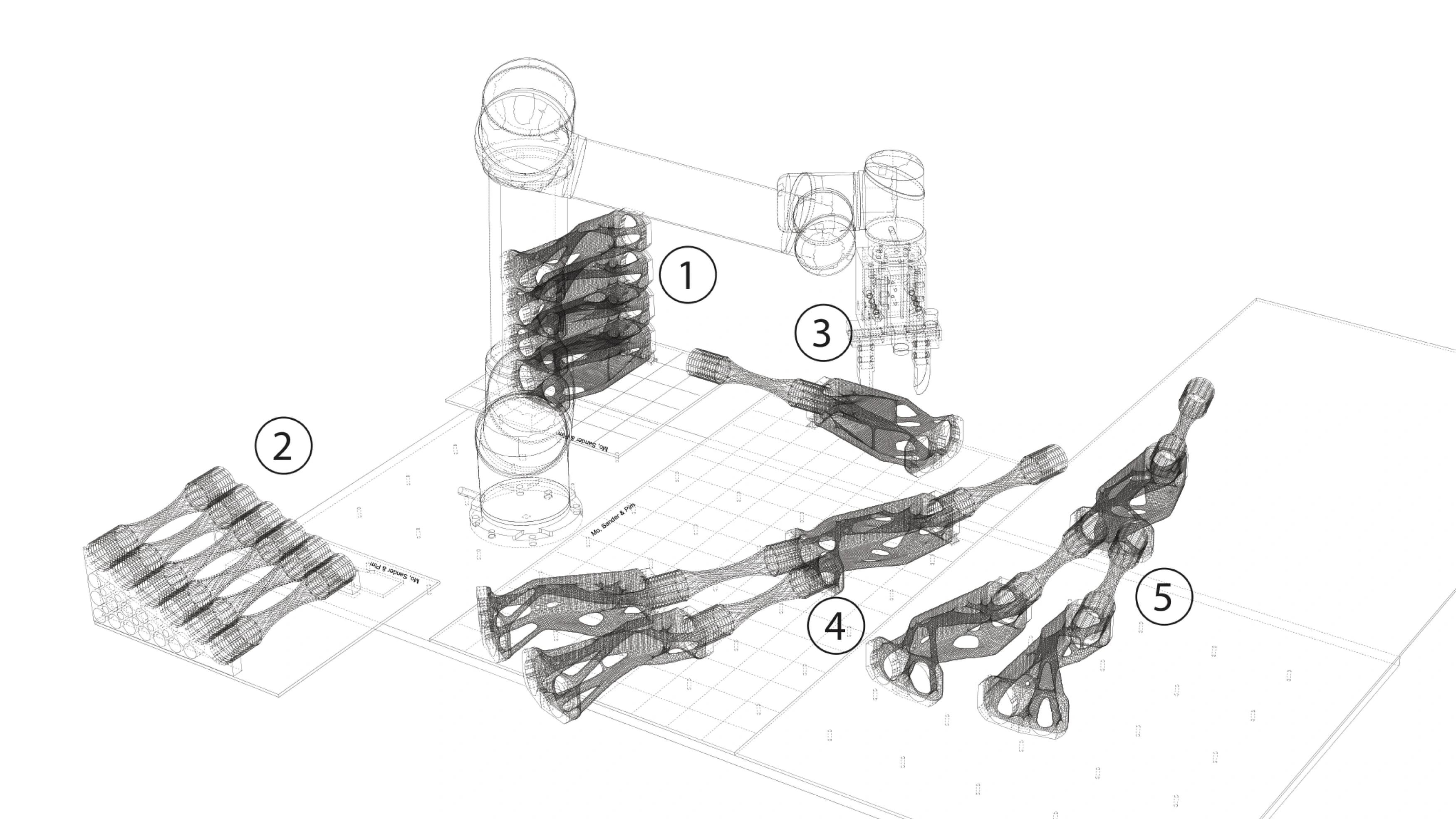
This project was developed within the Building Technology course and started from a broad question: how could a UR10 robot arm become part of a fabrication workflow instead of only serving as a positioning tool? Rather than defining a closed assignment from the start, the course left room for experimentation. That freedom made it possible to test how robotic handling, material behavior, and connection logic could inform one another inside a single prototype.
Driven by an interest in robotics and technical innovation, the project focused on building a workflow around the UR10 and then discovering what kind of architectural assembly that workflow could produce. The result became a study in stacking topology-optimized 3D-printed elements with inserted rods, using compression as an active part of the assembly process.
Starting Point
The first step was not to design a final object, but to understand the behavior of the printed parts under robotic handling. During testing, an important material effect became clear: when an air clamp compressed the 3D-printed pieces, the elements would fold inward under pressure and then return to their original shape once released.
That observation shifted the direction of the project. Instead of treating deformation as a problem to avoid, the workflow began to use it as a construction advantage. Compression made it possible to temporarily reduce the size of the printed nodes, place them with more control, and then let them spring back into position around their connectors.
Robotic Assembly Logic
From there, the project developed into a robotic stacking method. The UR10 was used to guide a sequence in which printed topology-optimized joints were compressed, positioned, and combined with connecting rods. Because the parts could temporarily deform, the assembly process became less about forcing rigid pieces together and more about coordinating a controlled cycle of pressure, placement, and release.
This created a lightweight branching structure that reads almost like a small stacked tree. The geometry is not defined by one monolithic printed object, but by the relationship between repeated nodes and the rods spanning between them. In that sense, the project tested how robotic fabrication can work with adaptable components rather than only with fixed, dimensionally exact parts.
Topology-Optimized Connections
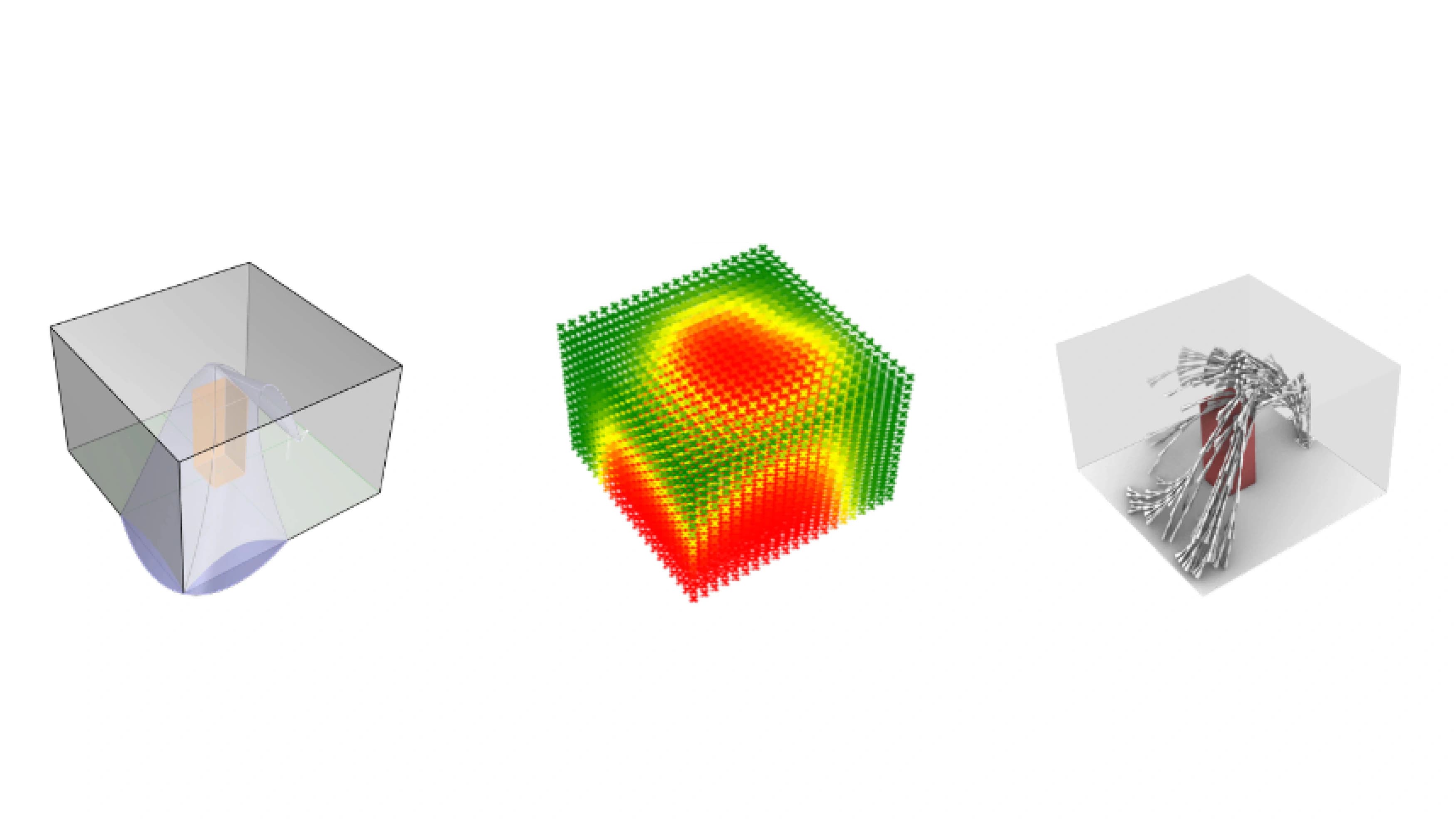
The printed parts were designed as topology-optimized connection pieces, which gave the elements a reduced and efficient geometry while still keeping material where it was structurally needed. That was important for two reasons. First, the parts needed to remain light enough for controlled robotic manipulation. Second, the project aimed to show that structural logic and fabrication logic could reinforce one another instead of being treated as separate stages.
The resulting nodes are expressive because their shape directly reflects performance: they are not decorative connectors, but pieces shaped by force flow, compression, and connection requirements. Combined with the rods, they form an assembly in which each part does a specific job while contributing to the overall spatial composition.
Workflow and Outcome
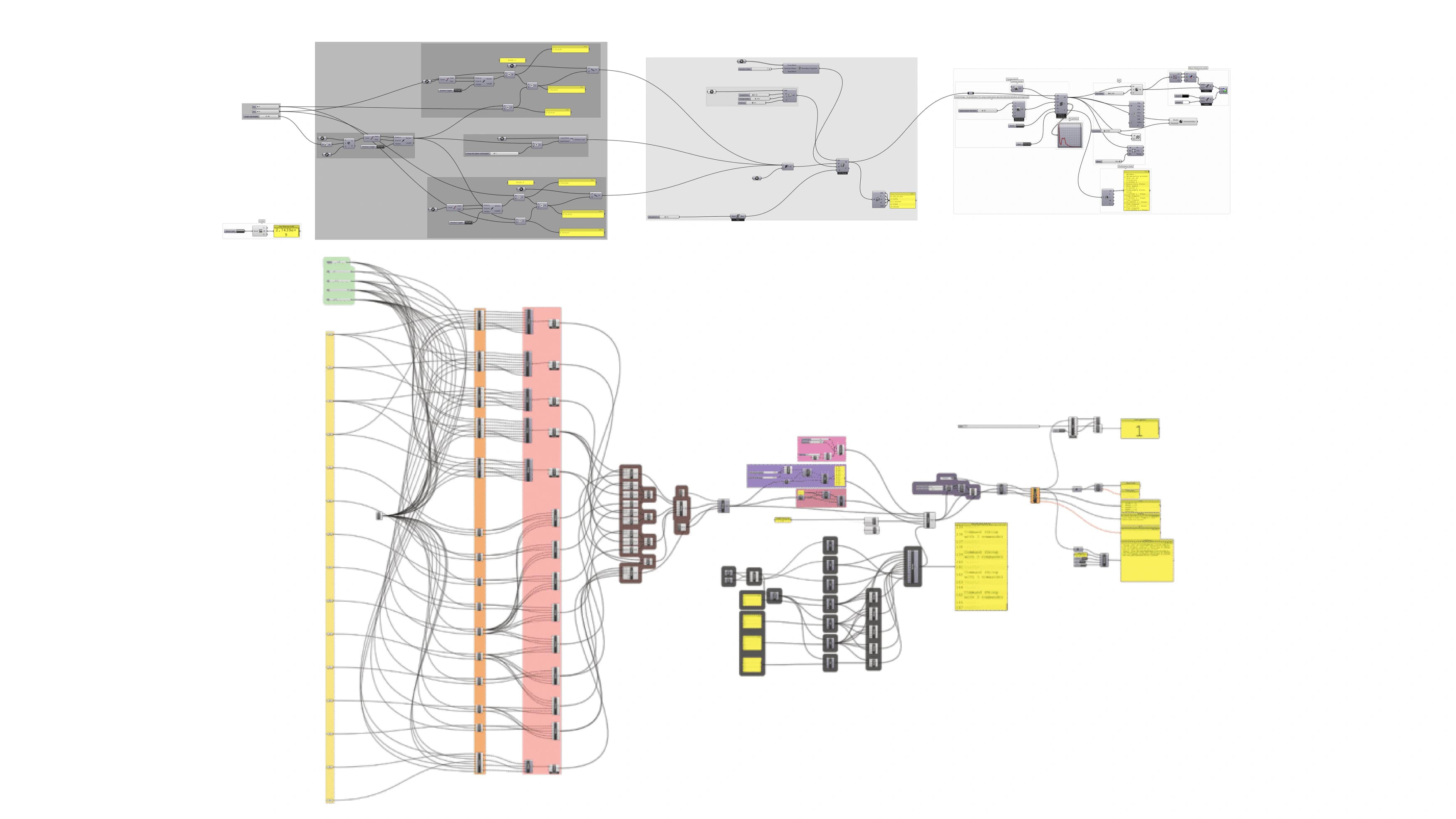
What makes the project compelling is that the design outcome emerged directly from the fabrication tests. The workflow did not begin with a fixed formal ambition and then search for a robotic justification afterward. Instead, the characteristics of the robot, the clamp, and the printed parts gradually defined what kind of assembly was possible.
The final prototype demonstrates a compact but clear idea: robotic construction can benefit from components that are temporarily flexible during assembly and stable once released. By combining the UR10 robot arm, an air clamp, 3D-printed topology-optimized nodes, and inserted rods, the project developed a fabrication method that is both technically driven and spatially legible.
Reflection
More broadly, the project shows how open-ended experimentation can lead to a precise architectural idea. What began as an exploration of a robotic workflow turned into a study of assembly through controlled deformation. That makes the work relevant beyond the course itself: it suggests how robotic fabrication might handle lightweight custom components in a more adaptive and less rigid way.
The prototype remains small in scale, but it establishes a strong link between robotics, material behavior, and structural form. It frames the UR10 not only as a machine for repetition, but as a tool for discovering new assembly logics through testing.