TODO: Make the text sounds less extreme TODO: More text and more build up
Overview
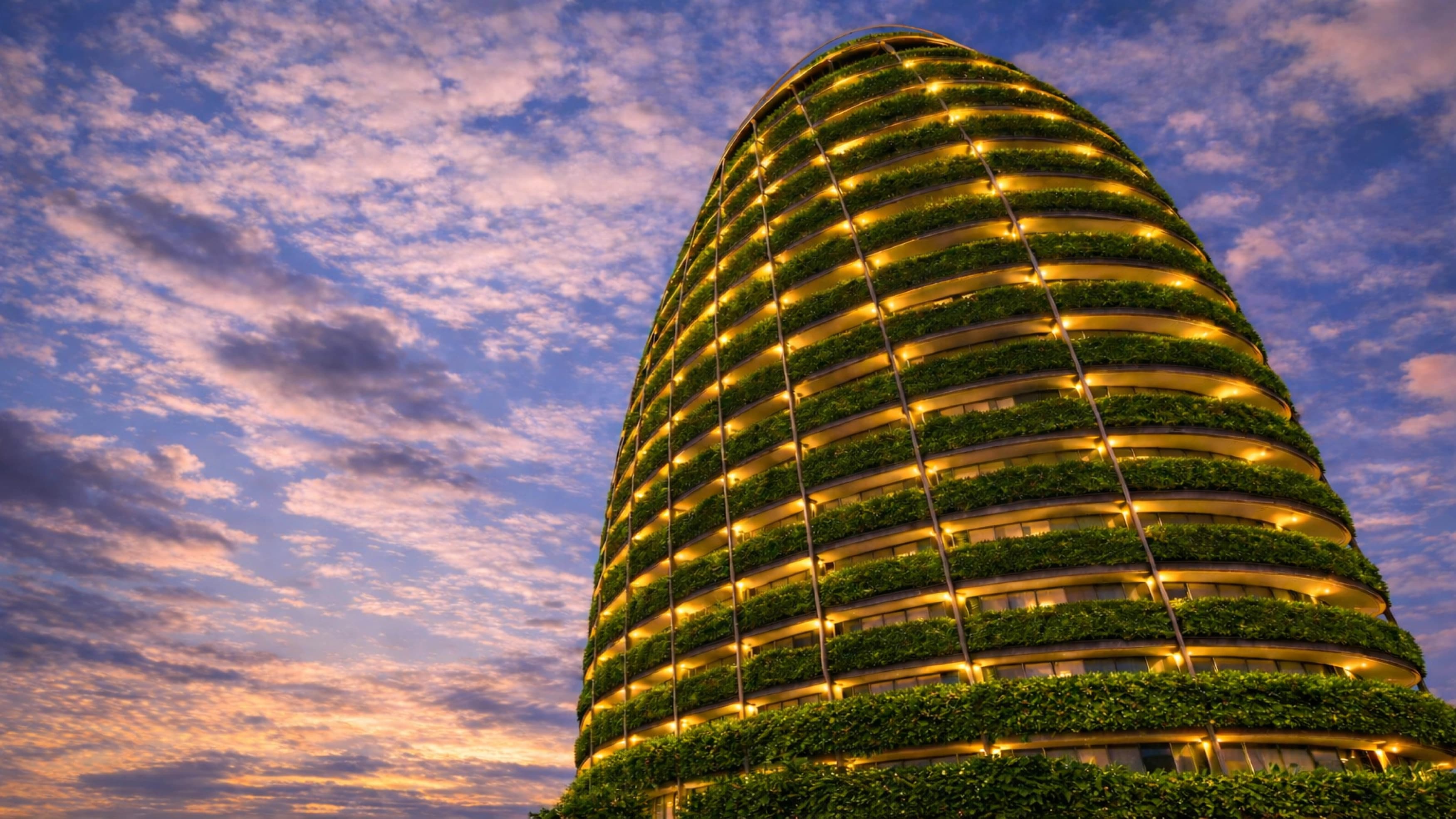
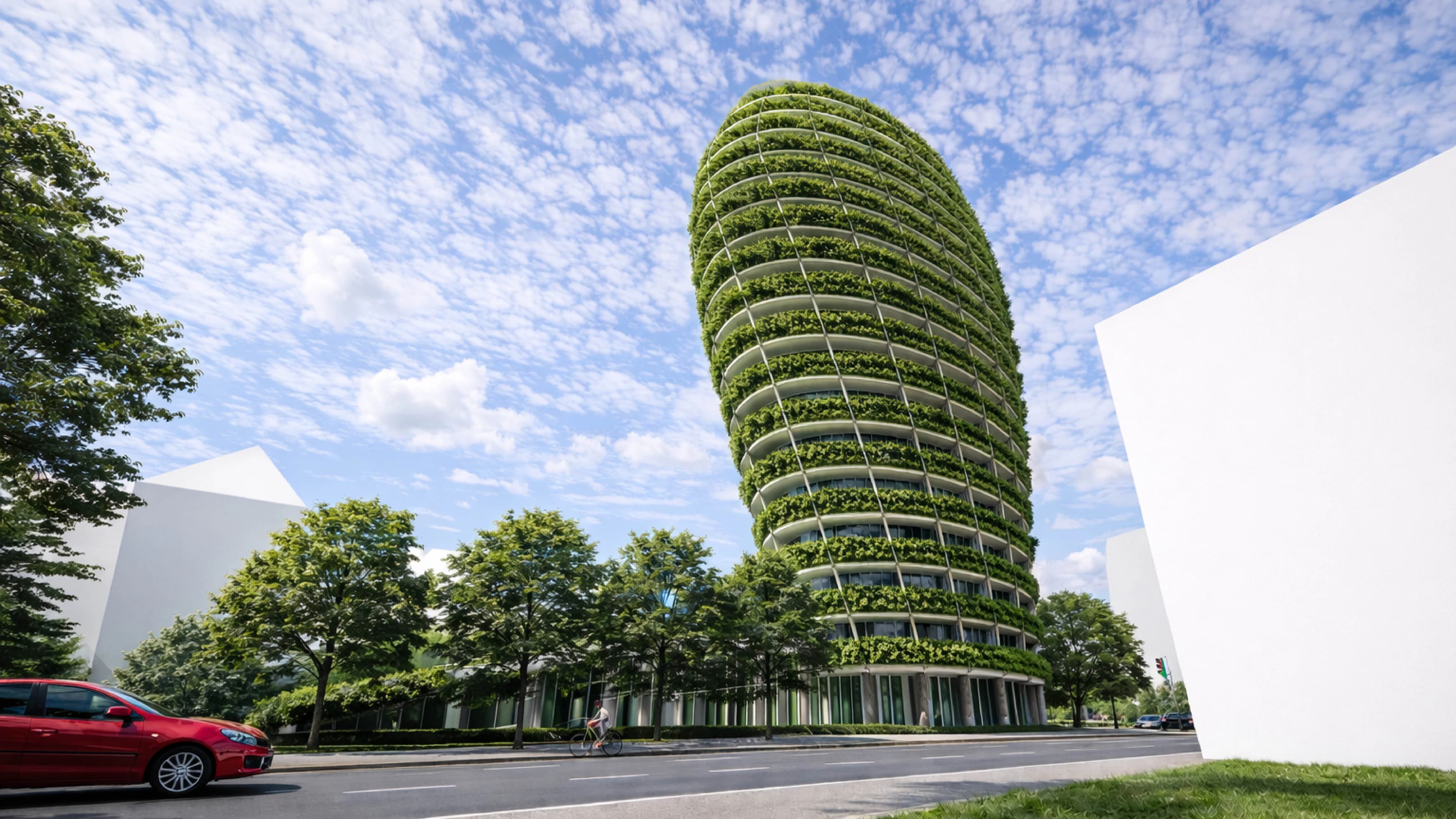
Extreme Architecture explores how computational design can be used to generate expressive architectural form while addressing environmental performance. The project was developed using Grasshopper, which enabled the exploration of highly intricate dynamic geometries and helped translate spatial ideas into a controlled parametric workflow.
As one of my earlier Grasshopper projects, it played an important role in shaping how I approach algorithmic design in architecture. It established a foundation for thinking about geometry not only as a visual outcome, but as a system that can respond to performance-driven goals.
Design Intent
The primary objective of the design was to create a building that pushed the boundaries of architectural form while responding to the pressing issue of the urban heat island effect in an innovative way.
The proposal takes the shape of a double-twisted tower, using geometry as both an aesthetic statement and an environmental strategy. Rather than treating the form as a purely sculptural gesture, the design investigates how a highly articulated tower shape can influence surrounding climatic conditions and improve the building's passive performance.
TODO: the term to use is anti vortex shading, due to the wind not directed in a block
TODO: tell the story about the function devission over the parts of the building, and the reason for that
Environmental Strategy
The twisting form was developed to optimize airflow and wind direction around the tower. This aerodynamic geometry helps channel air movement more effectively, improving natural ventilation and reducing stagnant heat build-up around the building envelope.
By encouraging better airflow, the tower aims to reduce dependence on mechanical cooling systems while contributing to a healthier and more comfortable microclimate for its occupants. In this way, the project combines formal experimentation with environmental intent, showing how computational design can support both architectural expression and climate-responsive performance.
TODO: ad here about how many vertical green is added
TODO: Ad here the grasshopper script image here
TODO: Look if we can ad some other images
Outcome
The project resulted in a freeform tower concept that demonstrated how parametric design tools can be used to connect architectural ambition with environmental reasoning.
More broadly, Extreme Architecture became an important early step in my development as a designer, showing how algorithmic workflows can be used to explore complex geometry, test design logic, and frame architecture as a performance-driven system rather than a static object.